
Brand Story Development: Gippsland Wine Company
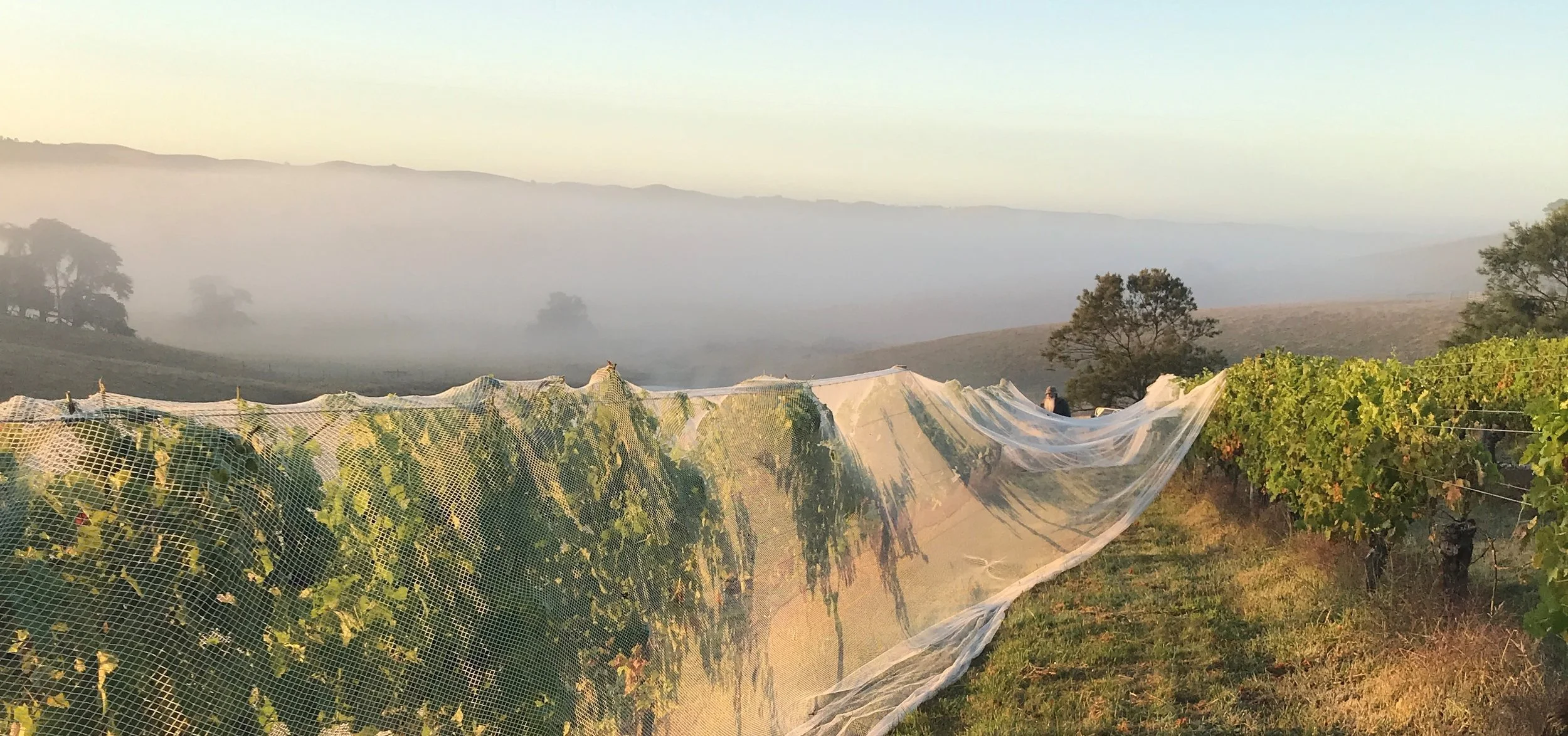
Part of the Brand Story development, we deep dive into the background, region, winemaking and terroir of a producer to drill down on what makes them special. Then, we can use this content across all touchpoints, from technical notes, media, reworked for website, social media, and database and club emails, e.g.,
Gippsland Wine Company
STORY:
Gippsland Wine Company is based on the Loch Village Vineyard and Cellar Door in the unofficial appellation of South Gippsland, marked by rolling hills and valleys, maritime influence and dark loams. Long, cool seasons make it ideal for the early ripening varieties, including GWC’s award-winning Pinot Noir, Chardonnay and Riesling. And, elegant, savoury examples of late ripening grapes, Cabernet Sauvignon and Sangiovese.
Gippsland Wine Company vigneron, Mark Heath spent 40 years’ working across wine sales, marketing and production in Barossa Valley, Clare Valley and Yarra Valley before venturing into his own vineyards in Gippsland, finally settling at Loch. Mark’s long experience and knowledge of the industry prepared him for his role as Associate Judge at the Gippsland Wine Awards. As well as Loch Village Vineyard, Mark sought out neglected vineyards for long term contracts, coaxing them back to life rather than revert to grazing pasture. Site selection is invariably north-south planting to provide a bit of westerly leaf cover from the sun and wind.
GWC is half way to Wilsons Promontory on the South Gippsland Highway, around 100 km south of Melbourne. The roaring Bass Coast winds keep the air crisp and tractors moving hay bales slow the winding roads down to a crawl. The fertile, rolling pasture make it prime dairy and beef cattle country and there are plenty of weekenders with untapped vineyards on their properties, planted from the 1970s when the region experienced a resurgence. Rather than an agricultural monoculture, the region boasts natural biodiversity that is celebrated on the local flora and fauna on Gippsland Wine Company’s wine labels.
First established in 1876, Loch is a tight knit village of friends and collaborators. When the local pub closed, Mark Heath and partner and Jane Taylor opened the cellar door up to the town and visitors for Friday night drinks. During the busy weeks of vintage, the locals rally to handpick the harvest when the grapes are perfectly ripe. Gippsland Wine Company contributes the cuttings to Prom Country Cheese Vine Ash Brie and the dairy in turn makes a washed rind cheese for his cellar door. Prom Country Cheese and GWC have collaborated on a new planting of Pinot Noir and Sangiovese in Moyarra.
REGION:
The sweeping Gippsland zone stretches from Melbourne to the south-eastern tip of Australia. As Oz Clarke noted, ‘The distance between its westernmost winery, Phillip Island Estate, and its easternmost Wyanga Park (at Lakes Entrance), is 240 kilometres as the crow flies.’ The region had wine production stretching back to the 19th century, ceasing during WWI and experienced a revival in the 1970s. Although, total production is still very small preventing the official designation of the sub-regions South Gippsland, West Gippsland and East Gippsland.
South Gippsland, the coolest of all, runs from Phillip Island, the regional centre Leongatha, down to Wilson Promontory national park, with Loch Village some 100 km south east of Melbourne (37° 30'S latitude). It’s often rolling, green hills (20-50 m altitude) are prime dairy country, folding in on one another to create a collection of microclimates. These vineyards are influenced by Westernport Bay (15 km to the west) and the onshore winds of Bass Strait (30 km south-west) making rainfall higher and more predictable, too.
Windy and often wet along the Bass Coast, historically the very cool maritime climate has tended to early ripening varieties such as Riesling, Chardonnay and Pinot Noir. But as the climate has changed, Cabernet Sauvignon now reliably ripens producing highly perfumed, refined examples. Soils vary significantly, ranging from dark black loams to lighter sandy soils in the grey to grey-brown spectrum with mottled, yellow to red clayey subsoils.
VINEYARDS & WINEMAKING:
Mark Heath has selected a collection of sites with interesting microclimates best suited to the varieties planted, taking a minimal intervention approach to viticulture and cropping at a limited two to three tonnes to the acre to keep fruit concentration. Mark works with award-winning winemaker and local Wonthaggi-raised, Marcus Satchwell (Dirty Three/Satch Wines) during vintage, who takes care to let the individual parcels of Gippsland terroir express themselves.
Loch Village Vineyard is the mature home block, sloping north-facing vineyard planted to Sangiovese, Cabernet Sauvignon and Chardonnay first planted in 1999. The vines are planted 1.5 metres apart and are traditionally cane pruned to achieve optimum quality fruit.
Also, in South Gippsland, Moyarra Vineyard is planted to Pinot Noir Clone 115, Sauvignon Blanc and Cabernet Sauvignon bought as a weekender and carefully managed by Mark and his team. Lochonia Vineyard is planted to Riesling, Shiraz and Cabernet Sauvignon. It was the established Bass Valley vineyard that fell into disrepair after its original owner passed away. Position on the crest of a steep hill, it is on grey loam with clay and sandstone subsoil. Jeetho Vineyard is a parcel of 600 vines planted on a steep northly aspect to Pinot Noir Dijon Clone 777, a dark, rich, velvety, Burgundian clone, that Mark plans to make into Sparkling Blanc de Noir over three years (2021).
In East Gippsland, Wyanga Vineyard was planted in 1970 to Riesling and Gewürztraminer, Wyanga is in East Gippsland, close to the Victorian Alps and Lakes Entrance on gravelly loam soils over volcanic clays. Maffra Vineyard with the Victorian Alps to the north and Gippsland Lakes to the south east on yellow and brown sandy clay loams. Calulu Vineyard on the Gippsland Lakes and near the 400-million-year-old limestone Buchan Caves in East Gippsland is planted on red, silty clay loam over limestone subsoil.